
Working together
Good help starts with a clear brief.
What to include when asking for an extra pair of hands, so both people know what to expect before the job starts.
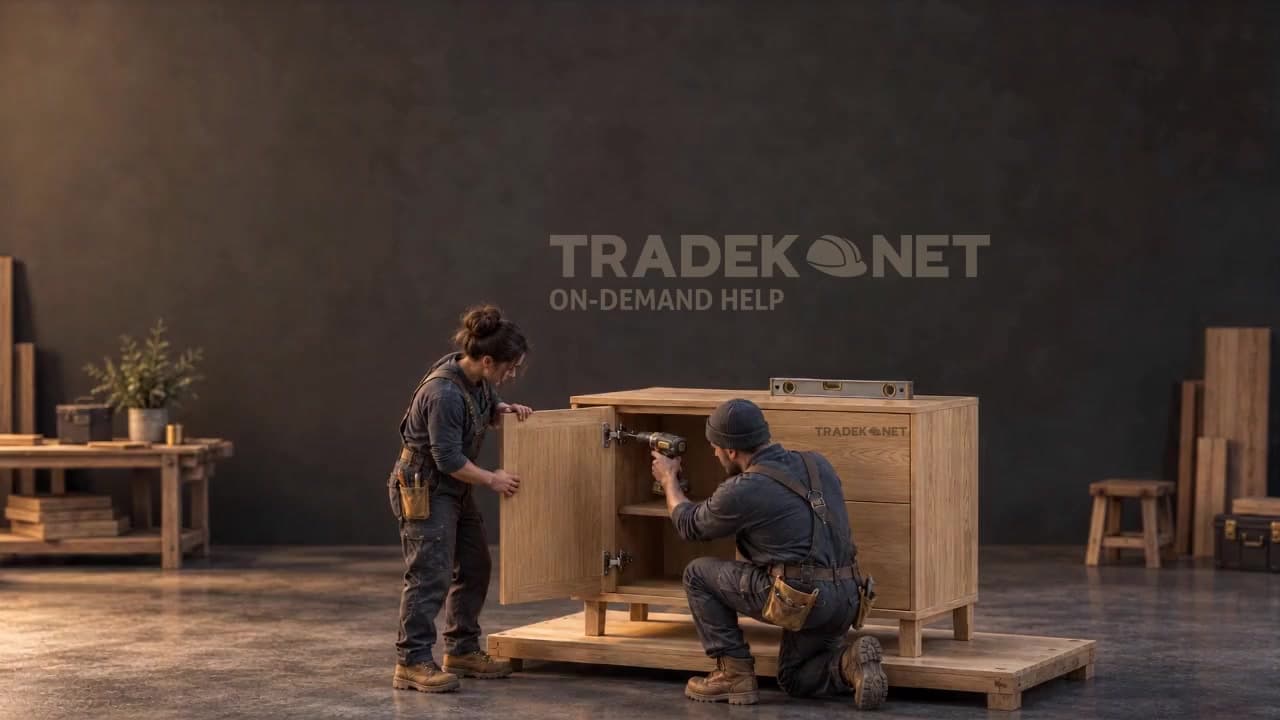
Start with the work.
‘Need someone tomorrow’ leaves a lot to guess. Describe the project, the stage it has reached and the tasks you need help with. Moving materials, preparing a workspace and assisting with an installation are different requests. Say what experience you are looking for and who will be there to direct the work.
Make the day easy to picture.
Include the date, expected start and finish times, and the general area. Say whether this is one day of help or whether more work might follow. If the schedule is uncertain, be clear about that. Agree on the exact meeting point and arrival contact privately; keep addresses and access codes out of public posts.
Agree on the practical details.
Put the offered rate, how hours will be recorded and expected payment arrangements in writing. Discuss travel, breaks and any expenses before either person commits. Explain what tools or equipment are provided and what someone is expected to bring. A brief is not a substitute for checking required qualifications or giving site-specific safety instructions.
Give people room to ask.
A useful brief lets someone decide whether the work fits their experience and availability. Invite questions before the first day. Try this structure: project and area; specific tasks; date and hours; experience needed; person supervising; offered rate and payment arrangements; items provided and items to bring. Fill in what you know, and flag what still needs to be agreed.
Close the loop.
Send a short summary of what you agreed. If the task, timing or arrangements change, tell the other person before they travel. Good working relationships start with clear expectations—and following through on them.
We’re building TradeKonet for pros, apprentices and homeowners. The app is not open for bookings yet. Join the waitlist to hear when it’s ready.
Join the launch waitlist